
Walk into a beautifully designed home, luxury hotel, or premium café, and you’ll notice something interesting. The space doesn’t rely on one bright ceiling light. Instead, different sources of light work together to create depth, comfort, and character.
This approach is called layered lighting, and it’s one of the most important principles used by interior designers.
Rather than thinking of lighting as a single fixture in the middle of the ceiling, layered lighting combines multiple light sources that each serve a different purpose. The result is a home that feels balanced, welcoming, and visually interesting at any time of the day.
Whether you’re designing a new home or refreshing an existing one, understanding how to layer lighting can dramatically improve both the look and functionality of your space.
What Is Layered Lighting?
Layered lighting is the practice of combining different types of lighting to create a space that feels comfortable, practical, and visually appealing.
Instead of depending on one source of illumination, designers build multiple layers that work together.
Think of lighting the same way you think about decorating. You wouldn’t rely on one piece of furniture to complete a room, and the same principle applies to lighting.
Each layer has its own role, and together they create a home that feels complete.
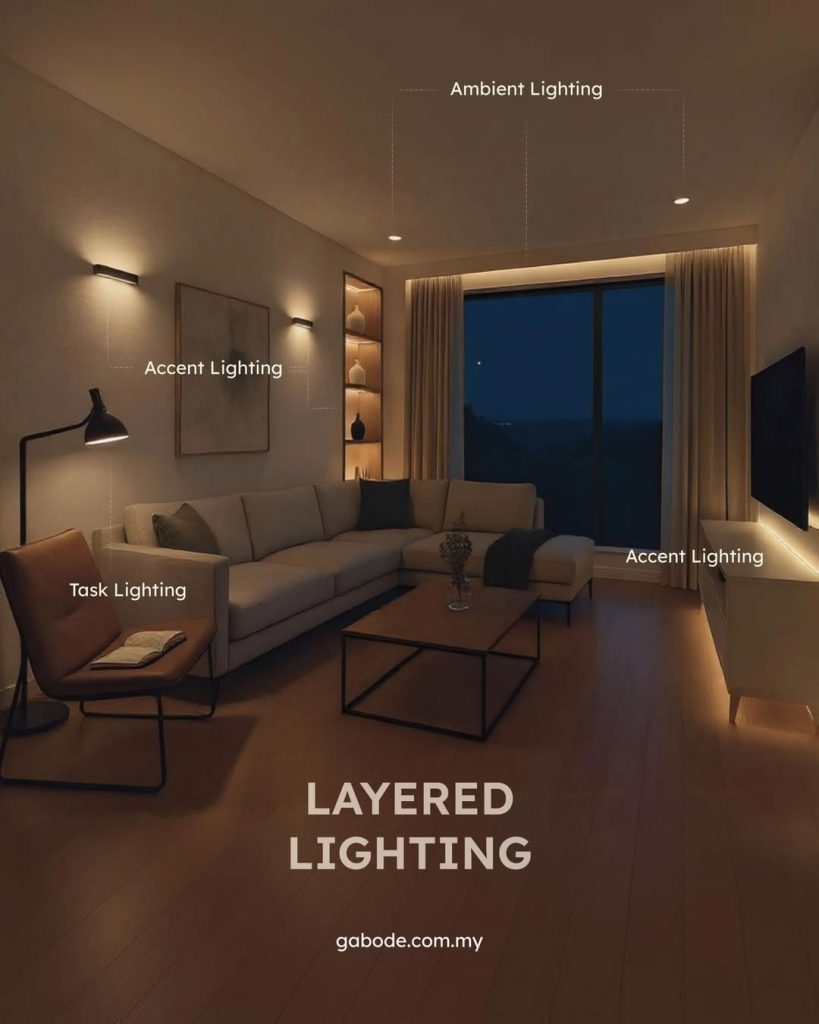
Layer One: Ambient Lighting
Ambient lighting is the foundation of every room.
It provides the general illumination that allows you to move comfortably through the space.
Common examples include:
- Ceiling lights
- LED panel lights
- Pendant lights
- Recessed ceiling lighting
Good ambient lighting should brighten the room evenly without feeling harsh or overwhelming.
Many homeowners make the mistake of believing brighter always means better. In reality, well-balanced ambient lighting creates a far more comfortable environment than excessively bright ceiling fixtures.
Think of ambient lighting as the canvas on which the rest of your lighting design is built.
Layer Two: Task Lighting
Once the room has general illumination, the next step is adding light where everyday activities happen.
This is known as task lighting.
Task lighting provides focused illumination for specific purposes, making daily activities more comfortable and efficient.
Examples include:
- Table lamps on work desks
- Bedside lamps for reading
- Kitchen counter lighting
- Vanity lighting
- Study lamps
Task lighting reduces eye strain and allows you to perform activities without needing the entire room to be brightly lit.
It also adds flexibility, allowing different parts of the room to serve different purposes throughout the day.
Layer Three: Accent Lighting
Accent lighting is where design begins to shine.
Unlike ambient or task lighting, accent lighting isn’t primarily about visibility. It’s about creating mood, highlighting features, and adding depth to a room.
Interior designers often use accent lighting to draw attention to:
- Artwork
- Decorative shelves
- Indoor plants
- Textured walls
- Display cabinets
- Architectural details
Accent lighting creates subtle shadows and visual contrast, making interiors feel richer and more sophisticated.
Even a small amount of accent lighting can dramatically change the atmosphere of a room.
Layer Four: Decorative Lighting
Decorative lighting combines beauty with function.
Instead of blending into the background, decorative lighting becomes part of the room’s personality.
Popular decorative lighting includes:
- Designer table lamps
- Decorative LED lamps
- Pendant lights
- Sculptural lighting
- Rechargeable lamps
- Festive decorative lights
These pieces do much more than illuminate a room—they become conversation starters and design elements in their own right.
A carefully chosen decorative lamp can transform an empty corner into one of the most attractive areas in your home.
At Raybrite Industries, decorative lighting is designed with this balance in mind, combining functionality with timeless style.
Why Layered Lighting Makes Every Room Feel Better
Many people don’t realise how much lighting affects their daily experience.
A room lit only by one ceiling fixture often feels flat and uninspiring.
When multiple lighting layers work together, the room gains depth, warmth, and flexibility.
For example:
- During the day, ambient lighting provides brightness.
- In the evening, decorative lamps create a cosy atmosphere.
- While working, task lighting improves focus.
- During gatherings, accent lighting enhances the room’s overall ambience.
Instead of changing your furniture, simply changing how you use light can completely transform the space.
Common Lighting Mistakes to Avoid
Even beautiful homes can feel uncomfortable if lighting isn’t planned properly.
Here are some of the most common mistakes homeowners make:
Relying on a Single Ceiling Light
One central light often creates harsh shadows and makes the room feel flat.
Adding table lamps and decorative lighting creates a more balanced environment.
Ignoring Decorative Lighting
Many people treat lighting purely as a necessity.
Decorative lighting adds warmth, personality, and elegance while improving the overall appearance of the room.
Choosing Fixtures That Don’t Match the Space
Oversized lighting can dominate a small room, while fixtures that are too small may look out of proportion.
Choosing lighting that complements the room’s size creates visual harmony.
Forgetting Flexibility
Every room serves different purposes throughout the day.
Using multiple lighting sources allows your home to adapt naturally from work to relaxation to entertaining guests.
Layered Lighting in Different Spaces
One of the biggest advantages of layered lighting is its versatility.
In a living room, ambient lighting can be paired with decorative table lamps and accent lighting to create a welcoming atmosphere.
In a bedroom, bedside lamps provide focused lighting for reading while decorative lighting creates a calm and relaxing mood.
A home office benefits from combining ambient lighting with task lighting, reducing eye strain while maintaining a professional environment.
Even hallways and entryways become more inviting with carefully placed decorative lighting instead of relying solely on overhead fixtures.
No matter the size of your home, layering light helps each space feel more intentional.
Bringing Professional Lighting Into Your Home
Interior designers rarely rely on expensive renovations alone.
Instead, they use lighting strategically to shape the way people experience a room.
Thoughtfully layered lighting makes spaces feel larger, more comfortable, and more luxurious without changing the furniture or layout.
This is why lighting is often one of the final yet most impactful elements in professional interior design.
Lighting Solutions from Raybrite Industries
At Raybrite Industries, we believe lighting should be as beautiful as it is functional.
Our collection of decorative lamps, modern lighting solutions, and contemporary designs makes it easy to create layered lighting that enhances every part of your home.
Whether you’re styling a living room, upgrading your bedroom, or creating a comfortable workspace, the right combination of lighting can completely transform the way you experience your home.
Conclusion
Layered lighting is one of the simplest ways to make your home feel professionally designed.
By combining ambient, task, accent, and decorative lighting, you create spaces that are brighter when needed, relaxing in the evening, and visually appealing throughout the day.
The best interiors aren’t built around furniture alone—they’re shaped by the way light moves through the room.
At Raybrite Industries, we believe every home deserves lighting that combines thoughtful design, lasting quality, and everyday functionality.
Frequently Asked Questions
1. What is layered lighting?
Layered lighting is the combination of ambient, task, accent, and decorative lighting to create a balanced and functional space.
2. Why do interior designers use layered lighting?
It creates depth, improves functionality, highlights design features, and allows a room to adapt to different activities throughout the day.
3. Is layered lighting suitable for small homes?
Yes. Even compact apartments can benefit from layered lighting using table lamps, wall lights, and decorative lighting.
4. What type of lighting should I buy first?
Start with good ambient lighting, then add task lighting where needed, and finally incorporate decorative and accent lighting to complete the space.
5. Where can I find modern decorative lighting?
Raybrite Industries offers a range of modern decorative lighting solutions designed to complement contemporary homes while combining style with functionality.